
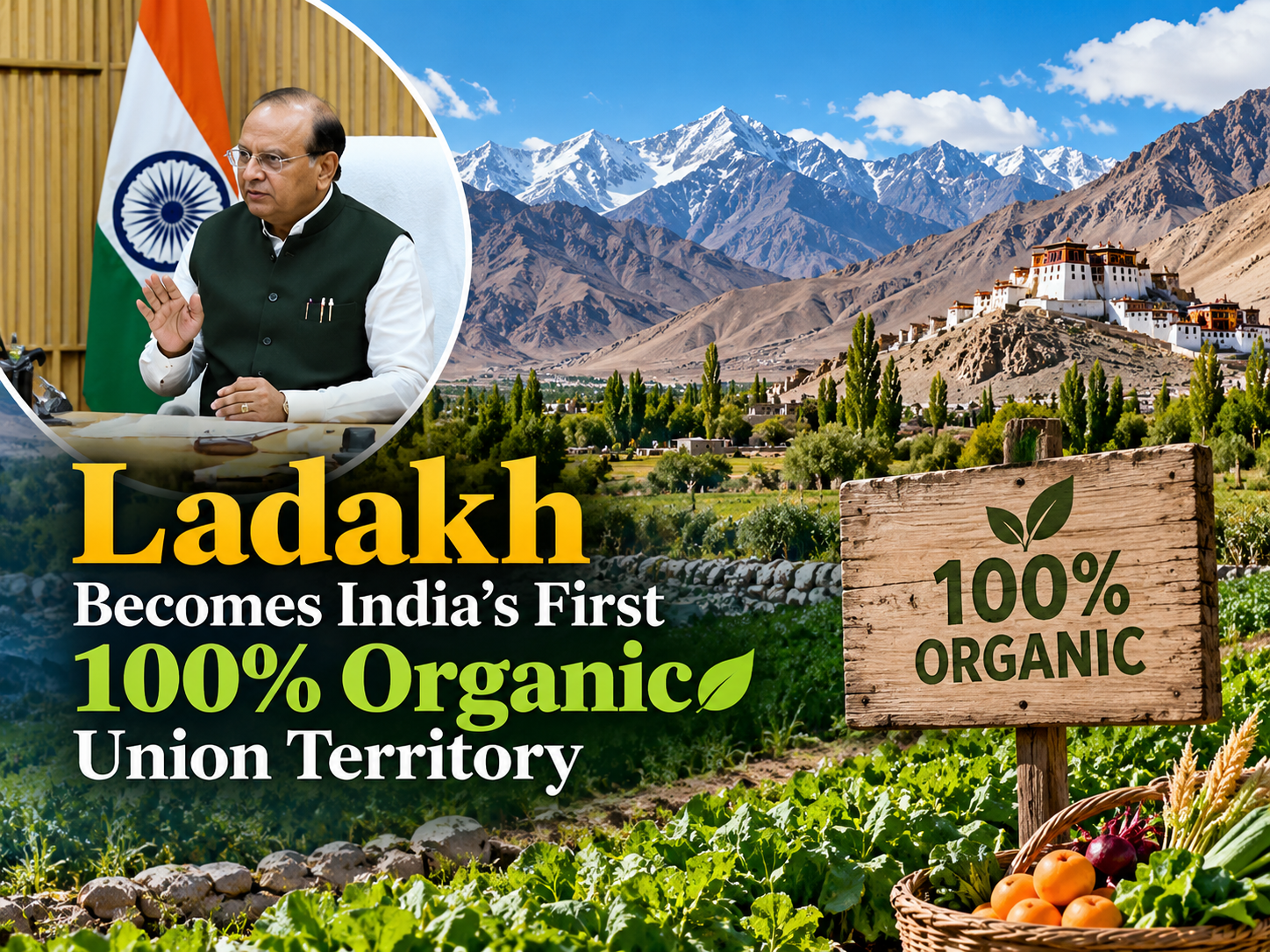
In a significant achievement for sustainable agriculture and environmental conservation, Ladakh has become India’s first Union Territory to attain 100% organic status. The milestone was officially announced by Lieutenant Governor Vinai Kumar Saxena, recognising the collective efforts of farmers and the administration in promoting chemical-free agricultural practices across the region. The achievement marks an important step towards preserving Ladakh’s fragile Himalayan ecosystem while strengthening traditional farming practices, improving soil and water health, and creating better livelihood opportunities for local farming communities.
Ladakh’s transition to organic agriculture is the outcome of a phased, multi-year initiative focused on eliminating synthetic fertilisers, chemical pesticides and harmful soil additives from farming practices. The initiative aims to protect the region’s natural resources, preserve biodiversity and promote environmentally responsible food production.
In July 2026, the Lieutenant Governor directed a complete prohibition on the procurement, distribution, sale, marketing and use of chemical and synthetic fertilisers for agricultural purposes across Ladakh. The measure was introduced to safeguard organic certification and ensure the long-term sustainability of the region’s agricultural sector.
The organic status is expected to create new economic opportunities for farmers by enhancing the market value and visibility of locally grown produce. Ladakh is known for its apricots, sea buckthorn, buckwheat, barley and a variety of vegetables, which could benefit from growing consumer demand for organic and traceable food products.
Improved organic certification, post-harvest management, value addition, product branding and stronger market linkages will be crucial to translating this achievement into higher returns for farmers. Better access to domestic and premium markets could further strengthen the region’s agricultural economy and encourage sustainable rural livelihoods.
Given Ladakh’s unique geography and environmentally sensitive landscape, the shift towards organic farming carries significance beyond agricultural production. Reducing dependence on chemical inputs can help protect soil quality, conserve water resources and support biodiversity in the high-altitude region. The initiative also highlights the importance of integrating traditional agricultural knowledge with sustainable farming practices to ensure that economic development does not come at the cost of environmental degradation.
Congratulating farmers and other stakeholders, Lieutenant Governor Vinai Kumar Saxena described the achievement as a moment of pride for Ladakh and the country. He emphasised that the region’s organic status should translate into tangible benefits for farmers through better market access, improved price realisation and sustainable livelihoods.